
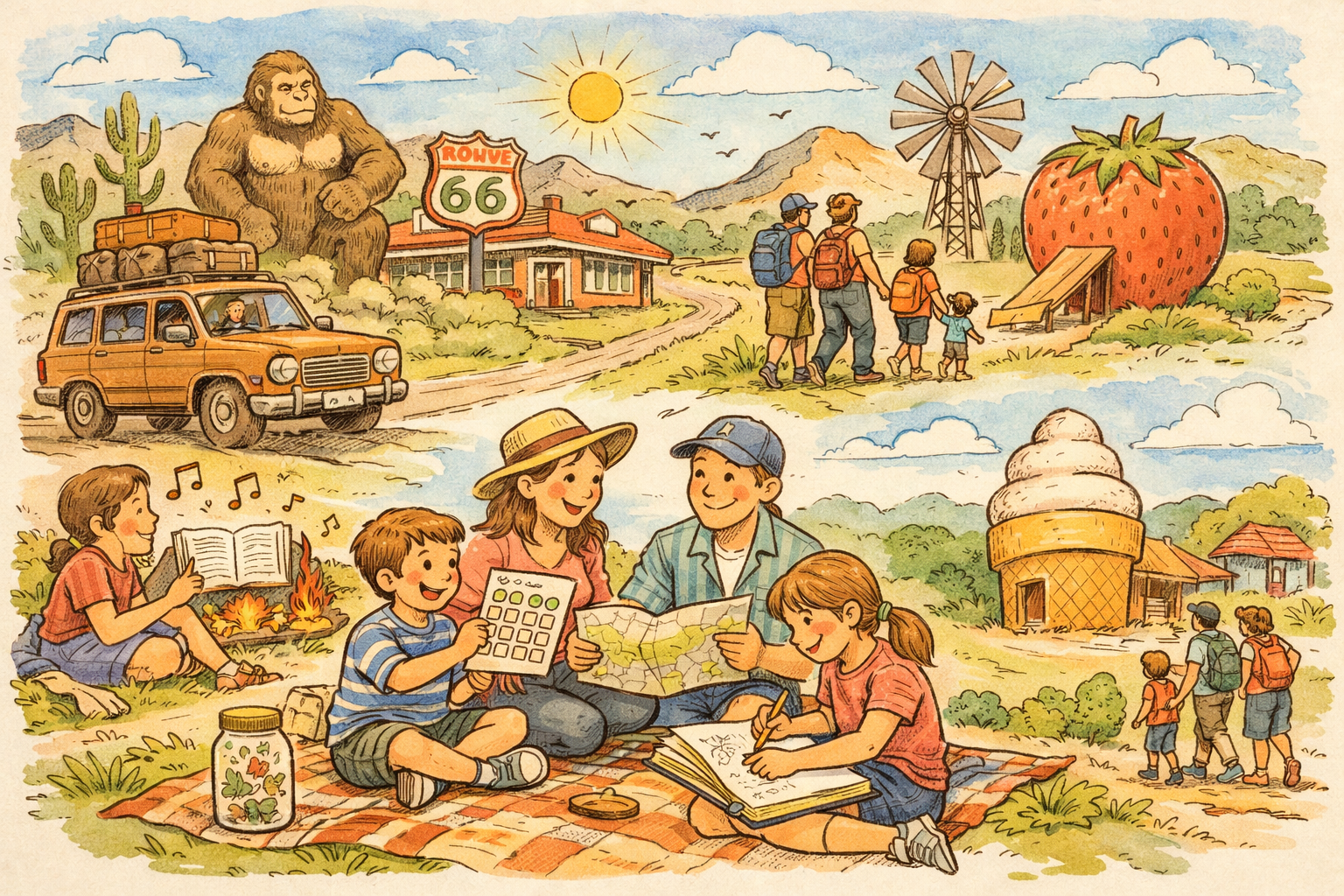
On vacation, especially during long road trips or airport delays, screens can feel like a lifesaver.
But here’s the question I’ve started asking more often:
Are we keeping kids quiet… or are we helping them engage?
There’s a difference.
And for many families, vacation is one of the few times when we have uninterrupted space together. That space deserves better than passive scrolling.
The good news? Screen-free doesn’t mean boring. It doesn’t mean chaotic. And it certainly doesn’t mean unrealistic.
It just requires a little structure.
Let’s walk through screen-free vacation ideas that actually work, especially on road trips, and why they’re so effective.
Why Go Screen-Free, Even Partially
This isn’t about eliminating devices entirely.
It’s about balance.
When kids spend extended time on screens during travel, a few patterns tend to emerge:
- Overstimulation followed by irritability
- Reduced observation of surroundings
- Shortened attention spans for offline activities
In contrast, screen-free engagement encourages:
- Environmental awareness
- Creative thinking
- Conversation
- Shared experiences
And those shared experiences? They’re what kids remember.
Build a Themed Road Trip Plan
Vacations feel longer, and more meaningful, when they have a narrative.
If you’re driving through historic corridors like Route 66 or visiting towns known for oversized roadside attractions, build your trip around a theme.
Examples:
- “World’s Largest” tour
- Historic highway exploration
- Weird roadside attractions challenge
- Americana landmarks journey
When kids understand the theme, they engage differently. They look out the window. They anticipate stops.
And anticipation builds excitement.
Before departure, show your kids a map. Highlight 3–5 themed stops. Build curiosity.
Travel-Themed Coloring
Coloring isn’t revolutionary.
But travel-themed coloring is.
When kids color something connected to their destination, giant statues, roadside landmarks, oversized attractions, they remain mentally present in the trip.
This extends engagement far beyond the stop itself.
Why it works:
- Activates fine motor skills
- Encourages focus
- Reinforces memory
Quick Tip:
Introduce a page before or after visiting a landmark. Pair the real-world experience with the creative one.
The connection deepens retention dramatically.
Family Travel Journals
Journaling doesn’t need to be formal.
In fact, for younger kids, it shouldn’t be.
Encourage:
- Sketching landmarks
- Writing one sentence per stop
- Rating experiences (1–10)
- Drawing their favorite oversized object
Journaling shifts kids from passive participants to documentarians. They take ownership of the trip.
Roadside Attraction Bingo
This works exceptionally well on multi-hour drives.
Create a simple bingo card with items like:
- Giant statue
- Water tower
- Vintage diner
- Farm animals
- Unique roadside sign
This gamifies observation.
Instead of asking, “Are we there yet?” kids begin scanning the horizon.
And that shift, from impatience to curiosity, changes the entire tone of the drive.
Audio Experiences with Visual Pairing
Not all screen-free activities need to be silent.
Audiobooks and travel-focused podcasts are powerful when paired with real-world landmarks.
For example, if you’re traveling along a historic stretch of Route 66, play a short segment about its history. Then challenge your child to describe what it might have looked like decades ago.
Listening plus imagination equals layered engagement.
“Design Your Own Landmark” Challenge
This is one of my favorite screen-free exercises.
Ask:
“If our town wanted tourists to stop, what giant object would we build?”
The world’s largest taco?
A 50-foot dog?
A towering crayon?
Have your child sketch it. Name it. Explain why travelers would visit.
You’re building creativity. Presentation skills. And even basic marketing awareness — all without a screen.
And kids love it!
Structured Quiet Blocks
Many travel meltdowns happen because kids move between total stimulation and total boredom.
Instead, create rhythm:
- 30 minutes of coloring or journaling
- 10-minute snack break
- 15 minutes of scavenger hunt
- Repeat
Predictable structure reduces anxiety.
And calm kids make smoother vacations.
Why Screen-Free Travel Is Increasingly Valuable
Parents today are actively searching for:
- Screen-free vacation ideas
- Road trip activities for kids
- Travel activities without tablets
- Offline activities for family travel
This isn’t nostalgia.
It’s intentional parenting.
Families want:
- Deeper connection
- Better memories
- Less digital fatigue
Oversized roadside attractions, quirky landmarks, themed activity books — these analog experiences cut through the noise.
They’re tactile. Physical. Real.
And in a digital-first world, that feels refreshing.
Practical Screen-Free Travel Framework
If you want to implement this intentionally, here’s a simple structure:
Before the Trip
- Choose 3–5 themed stops
- Prepare activity materials
- Set expectations about screen balance
During the Trip
- Alternate structured creative time with observation game
- Use landmarks as conversation starters
- Encourage reflection
After the Trip
- Revisit journals or coloring pages
- Rank favorite stops
- Reinforce shared stories
That last step matters more than most people realize. Memory strengthens through reflection.
The Kind of Travel Memory Worth Building
Screen-free vacation ideas don’t require perfection.
They require intention.
The goal isn’t to eliminate every device. It’s to create space for presence.
Because years from now, your kids won’t remember the episode they watched in the back seat.
They’ll remember the giant gorilla.
The enormous strawberry.
The weird roadside statue that made everyone laugh.
They’ll remember the shared moment.
And that’s the kind of travel memory worth building.
Leave a Reply