
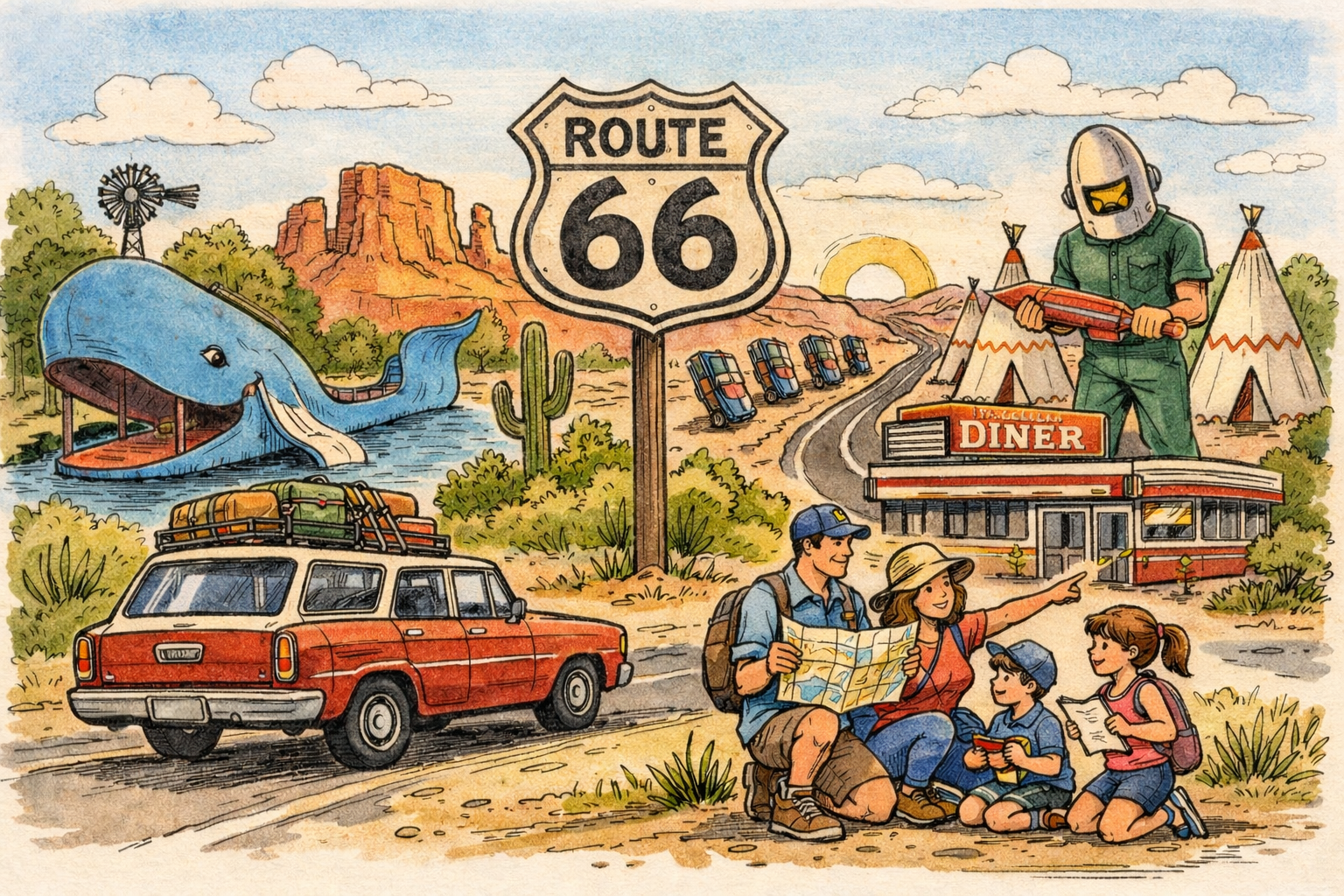
Driving Route 66 with kids isn’t just a road trip. It’s a time capsule.
This year marks 100 years since the Mother Road was officially established in 1926. That’s a rare milestone. And for families, it’s an incredible opportunity to turn a simple drive into something layered: historical, visual, and genuinely fun.
But let’s be realistic.
A cross-country drive with kids requires more than nostalgia It requires structure.
Let’s walk through how to plan a Route 66 road trip with kids that feels intentional, manageable, and memorable.
Don’t Drive the Entire Route Unless You Truly Want To
Route 66 stretches nearly 2,500 miles from Chicago to Santa Monica.
Driving all of it with kids? Possible. But not always practical.
Instead, choose high-impact segments:
Best Route 66 Segments for Families
Illinois (Chicago to Springfield)
Short distances between stops. Multiple preserved landmarks. Easy access.
Oklahoma & Texas Panhandle
Dense with quirky roadside attractions and vintage diners.
Arizona (Seligman to Kingman)
Well-preserved historic sections. Dramatic scenery. Iconic Americana.
Choosing 2–4 hour driving blocks between stops keeps energy steady.
Build Anchor Stops Into Each Day
Kids need something to anticipate.
Route 66 is full of oversized roadside attractions that naturally create excitement. Examples include:
- Blue Whale of Catoosa
- Cadillac Ranch
- Gemini Giant
- Wigwam Motel
They’re great energy resets.
When kids know there’s a giant whale or buried Cadillacs ahead, patience increases dramatically.
Create a Route 66 Travel Framework
Here’s a simple structure I recommend for each day:
Morning Drive (1.5–2 hours)
Low energy. Easy engagement. Audiobook or light activity.
Anchor Stop #1
Oversized landmark or historic diner.
Creative Reflection
Sketch it. Rank it. Write one sentence about it.
Midday Drive (1–2 hours)
Snack break. Observation game.
Anchor Stop #2
Scenic overlook, neon sign district, or museum.
Kids have a better day when the day feels predictable.
Lean Into the Centennial Story
This isn’t just any year.
Route 66 turns 100.
Explain that.
Tell your kids:
“This road has been around since 1926. Great-grandparents drove here.”
That historical framing elevates the experience.
You’re not just sightseeing. You’re participating in a centennial celebration.
That narrative sticks.
Pack With Intention
Road trip packing doesn’t require excess.
It requires focus.
Bring…
- A travel-themed coloring or activity book
- Lightweight sketchpad
- Simple scavenger hunt list (water towers, vintage signs, giant statues)
- Small snack organizer
- Printed map highlighting original Route 66 alignments
Avoid bringing too many distractions.
Choice overload shortens engagement.
Use Route 66 as a Living Classroom
Route 66 naturally introduces:
- American economic history
- Marketing strategy (why towns built giant statues)
- Geography (eight states across diverse terrain)
- Post-war mobility culture
But here’s the key: keep it conversational.
Instead of lecturing, ask:
- Why did towns compete for travelers?
- Why build something giant instead of something small?
- What would we build to attract visitors today?
You’re introducing critical thinking without making it feel academic.
Expect Energy Swings
Let’s normalize something.
Even the most thoughtfully planned Route 66 trip will have low-energy moments.
Plan for them.
Afternoon quiet blocks help.
Short walking breaks reset attention.
A simple “design your own giant roadside attraction” prompt works wonders.
Prepared flexibility beats reactive frustration.
Why Route 66 Works So Well for Families
Route 66 isn’t sterile.
It’s textured.
It’s colorful.
It’s intentionally strange.
And that strangeness is exactly what captivates children.
Oversized roadside attractions, neon signs, and historic diners create visual interruption and visual interruption strengthens memory.
When something breaks monotony, the brain flags it as important.
That’s why kids remember the whale.
The giant statue.
The teepee-shaped motel.
The Centennial Advantage
The 100th anniversary adds urgency.
Communities are restoring landmarks. Hosting events. Revitalizing signage.
Energy is higher this year.
And energy is contagious.
If there was ever a time to drive Route 66 with kids, it’s now.
It’s About The Stories You Bring Home
Planning a Route 66 road trip with kids doesn’t require perfection.
It requires pacing.
Structure.
And intentional stops that create moments instead of miles.
Drive a preserved stretch.
Stop at something oversized.
Talk about why it exists.
Encourage creativity afterward.
Because the best family road trips aren’t defined by distance.
They’re defined by the stories you bring home.
And few roads in America tell stories like the Mother Road.
Leave a Reply